Not every corporate film is ready for television.
A beautifully shot brand film may perform exceptionally well on a company’s website or social media, yet still fall short of the editorial, technical, and storytelling expectations of a global broadcaster.
The difference isn’t simply production quality.
It’s discipline.
As more organizations invest in documentaries, leadership films, and institutional storytelling, understanding what separates a corporate video from a broadcast-ready production has never been more important.
Broadcast Is Built on Credibility
Unlike advertising, broadcasters have spent decades building one thing above all else:
Audience trust.
Every programme they air contributes to that trust.
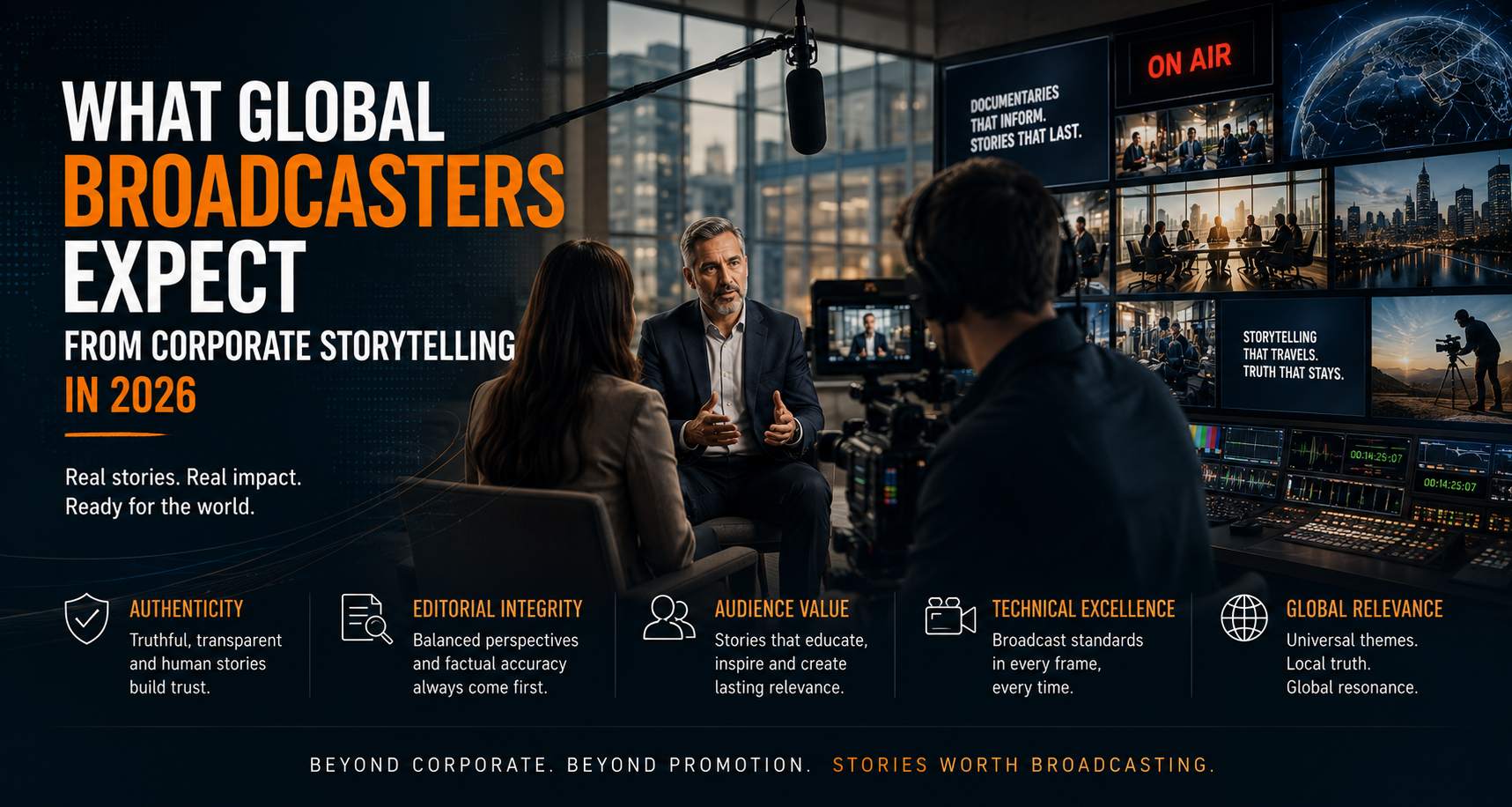
That means corporate stories entering a broadcast environment are expected to uphold standards that go well beyond attractive visuals.
Broadcasters ask questions such as:
- Is this story accurate?
- Are the claims verifiable?
- Is the narrative balanced?
- Does the audience learn something meaningful?
A film that exists solely to promote a brand rarely satisfies these expectations.
Authenticity Is No Longer Optional
Today’s audiences are remarkably good at recognising promotional content.
Global broadcasters know this.
That’s why authenticity has become one of the defining characteristics of successful corporate documentaries.
Authenticity comes from:
- genuine conversations
- honest interviews
- credible storytelling
- appropriate context
Not from perfectly rehearsed sound bites.
Sometimes an imperfect but sincere interview creates a stronger connection than a flawless scripted performance.
Story Before Brand
One of the biggest shifts companies experience when creating broadcast-ready content is this:
The brand is no longer the main character.
The story is.
Instead of asking:
“How do we showcase our company?”
The question becomes:
“Why should this story matter to someone who has never heard of us?”
That subtle shift transforms the entire production.
It influences scripting, interview style, pacing, editing, and even what gets left out.
Editorial Integrity Matters
Corporate communications naturally focus on achievements.
Broadcast storytelling looks for perspective.
That means films should avoid:
- exaggerated claims
- unnecessary superlatives
- overt promotional language
Instead, they rely on:
- evidence
- context
- real experiences
- authentic voices
Trust is earned through restraint, not repetition.
Technical Excellence Is the Starting Point
Professional cinematography is expected.
So is clean audio.
So is colour accuracy.
These are not competitive advantages.
They are entry requirements.
Broadcasters also expect:
- consistent audio levels
- correct delivery specifications
- legal clearances
- music licensing
- caption compliance
- archive permissions
The technical process is often far more rigorous than audiences realise.
Compliance Is Part of Storytelling
Many people think compliance begins after editing.
In reality, it starts long before the first camera is switched on.
Every interview, archival photograph, music track, and factual statement should be captured with eventual distribution in mind.
Good compliance protects:
- the broadcaster
- the client
- the production company
- the audience
It’s one of the least visible—but most important—parts of professional filmmaking.
Why Documentary Thinking Is Growing
Increasingly, organisations aren’t simply celebrating milestones.
They’re documenting them.
Whether it’s:
- a centenary
- an organisational transformation
- a technological breakthrough
- a cultural initiative
leaders are recognising that documentaries preserve far more than marketing campaigns ever can.
They preserve institutional memory.
Our Experience
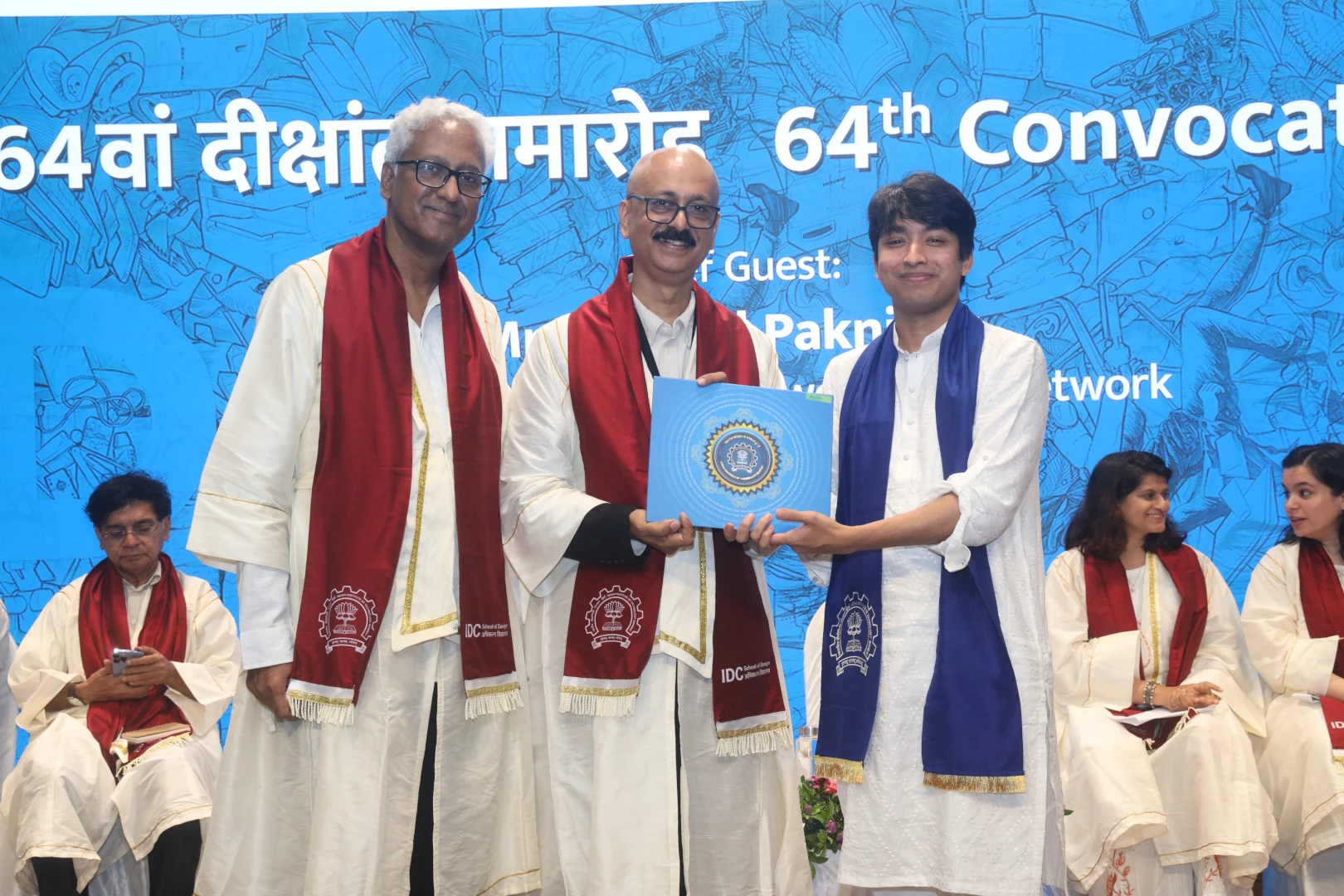
Working on the documentary celebrating Jeena Logistics’ 125-year journey, which was broadcast on the History Channel and later made available to Jio History TV viewers, reinforced an important lesson for our team.
What made the production successful wasn’t simply the cameras we used or the locations we filmed.
It was the discipline applied throughout the process.
Every interview was approached with authenticity.
Historical references were carefully reviewed.
Editorial decisions consistently asked:
“Does this strengthen the story—or simply promote the brand?”
That distinction shaped every stage of production.
The Future of Corporate Storytelling
The gap between corporate communication and broadcast storytelling continues to narrow.
Employees expect authenticity.
Customers expect transparency.
Investors expect credibility.
The organisations that embrace these expectations will create films that remain relevant long after a campaign ends.
Because the best corporate stories don’t feel like marketing.
They feel worth watching.
Final Thought
A broadcast-ready film isn’t defined by expensive equipment or dramatic visuals.
It’s defined by thoughtful storytelling, editorial discipline, technical excellence, and respect for the audience’s intelligence.
Whether a film is destined for television, streaming platforms, internal audiences, or digital channels, those principles remain the same.
At 72010 Network Pvt. Ltd., we believe every meaningful story deserves to be told with the same care, integrity, and craftsmanship expected of the world’s leading broadcasters.
If your organisation is preparing to document a milestone, celebrate a legacy, or tell a story that deserves lasting impact, we’d love to help you create a film that’s built not just for today—but for the years to come.